
Palm trees, single-story houses with colored roofs, and a clear blue sky — that was the first thing I saw when I looked out of the airplane, seeing Zanzibar for the first time.
As I stepped out, the humid and overwhelming air wrapped around me — the kind you only feel in tropical places, and the kind that tells you: this trip is going to be something special.
Leaving the airport and hopping into a taxi felt like shifting into another reality. A side of the world I’d never seen before. The first few minutes were spent weaving through the chaos of the airport district. But then the streets cleared — and all that remained were the narrow single-lane roads of Zanzibar. Just wide enough for a transport van and whatever else the island had to offer.
People walking, cycling, carrying goods, pushing wooden trolleys pulled by cows — all moving together on the same road. And somehow, it worked.
These roads were magical. Everywhere I looked, untouched greenery. The same single-story houses continued — built from coral stone, mud, and palm trees. I learned from my driver that most are built slowly, by the owners themselves. First you get the land. Then, as you save, you build. A roof when you can. A wall when you’re able.
The drive kept surprising me. For the first time, I saw the island’s local transport — minibuses packed with people, sometimes overflowing, holding on from the outside while laughing and chatting.
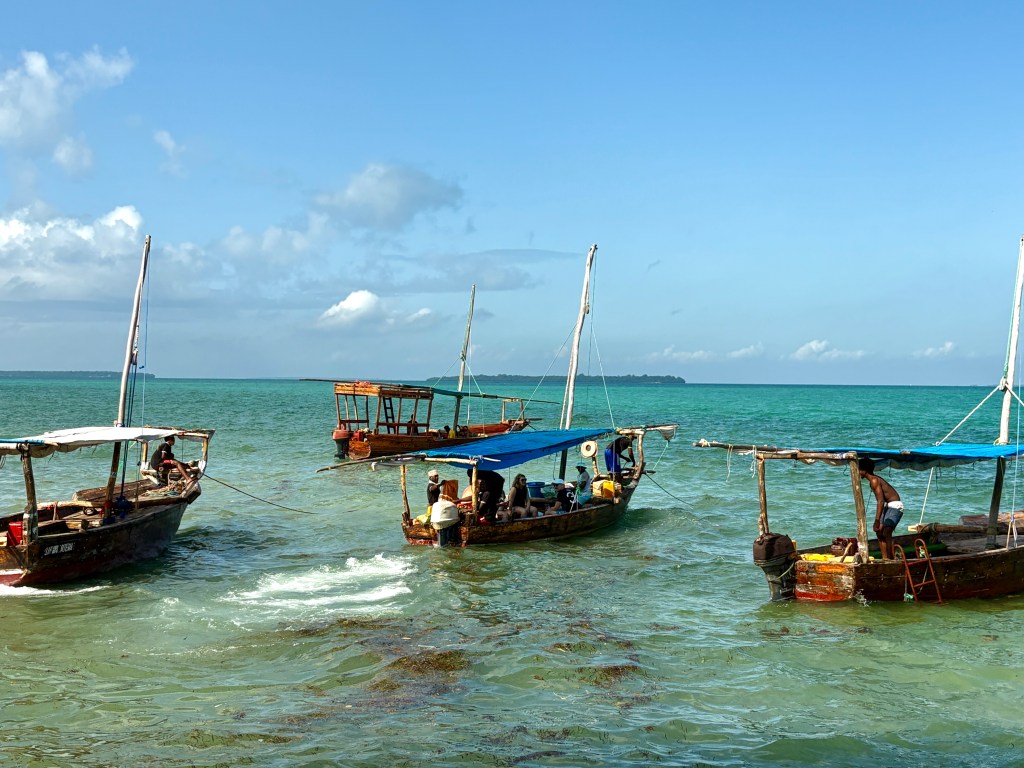
I arrived at my hotel just in time to catch one of the most breathtaking sunsets I’ve ever seen — at Kendwa Beach. White sand. Handmade wooden sailboats. The turquoise ocean stretching into a sky that looked like it was on fire. I stood there, surrounded by locals who seemed just as mesmerized by their island as I was. And all I could think was: how incredibly lucky I am to be here.
While thinking about how to write this post, I debated between an itinerary-style breakdown or something more personal. I chose the latter.
Because travel, at least to me, isn’t about what I did on Tuesday. It’s about how a place makes you feel — and what emotions you carry back home with you.
So this isn’t a guide. It’s a collection of moments that left a mark. I’ll share what stood out to me — especially as someone who’s been to other tropical destinations — what surprised me, what you shouldn’t miss, and what I felt in the quieter spaces in between.
And if you’re headed to Zanzibar, or just daydreaming about somewhere far and warm — maybe this helps you feel something too.
6 Must-Do Experiences in Zanzibar
Here are a few standout experiences I’d recommend to anyone visiting Zanzibar — whether it’s your first time or your fifth, and in no particular order.

The Safari Blue
You start your day early, hopping aboard one of Zanzibar’s traditional wooden boats — a quiet masterpiece of local craftsmanship. Depending on the mood of the ocean, you either catch the wind in your sail or bounce along by engine.
You’re headed to a sandbank in the middle of the sea — one of those unreal places that seems like it shouldn’t exist. On the way, you can’t help but wonder what it must’ve felt like to be a pirate once, crossing the ocean on boats not much bigger than this. When you reach the sandbank, everything slows down. Powdery white sand, turquoise water so clear it looks fake, and a plate of fresh fruit — watermelon, mango, pineapple — handed to you by your barefoot captain. You swim. You sit. You breathe. You let time stretch and dissolve.
After about 30–45 minutes, it’s a quick boat ride to a snorkeling spot nearby. Honestly, it’s not world-class — visibility can be iffy — but you still dive in. Sometimes it’s not about the coral or the fish. Sometimes it’s just about being in the water, in that moment.
Then comes the feast. You’re taken to a nearby island where tables are laid under the trees, and plates of grilled seafood, rice, sauces, and fresh vegetables are served with cold Kilimanjaro and Safari beers. It’s simple, delicious, and the kind of meal that tastes better because you’re hungry and sun-kissed. If you’re not too full, you can walk inland and try your luck climbing the massive baobab tree — a towering, twisted sculpture that feels like it’s been watching over the island for centuries.
The day ends with the sail catching wind again. Your skin is warm, your hair smells like salt, and the breeze wraps around you like a final blessing.
Getting Lost in Stone Town
Stone Town is a maze — and the best way to experience it is to put away your map and just wander.
I visited Stone Town on my last day in Zanzibar, and honestly, I’m glad I did. After spending the week surrounded by untouched beaches and peaceful island life, arriving in Stone Town felt like entering a completely different world. It was chaotic, layered, and full of energy. It also made me feel like I had missed something — like this was a side of the island I hadn’t understood yet. And it gave me one more reason to return.
Stone Town used to be the island’s commercial and cultural center, and while most people now live in New Town just next door, the old town is still buzzing. The narrow alleyways are packed with shops, spice stalls, local cafés, and bursts of color. It’s one of those places where you turn a corner and instantly feel like you’ve stepped into a different time.
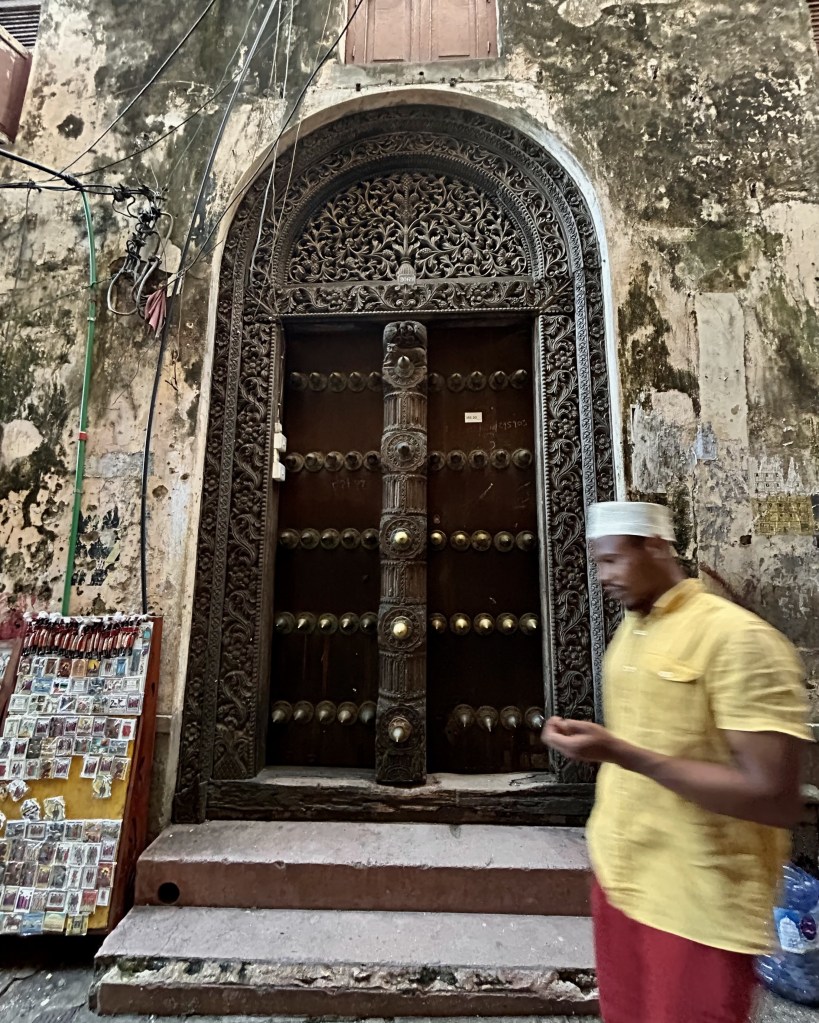
What surprised me most was how much history hides in the doors. I had no idea before coming here, but Zanzibar is known for its beautifully carved wooden doors — each one unique, full of symbols, patterns, and tiny details that tell stories about the family behind it. Some even have protective spikes, a cultural nod to Indian and Omani influences. It turned out to be one of my favorite things — walking around and just looking at doors.
Stone Town is also a great place to pick up gifts, photograph life as it really happens, and people-watch while sipping something cold in the shade. And of course, we passed by the house where Freddie Mercury was born — now a small museum dedicated to his legacy. It’s not peaceful. It’s not polished. But Stone Town has a pulse — and if you let yourself get lost in it, you’ll feel it.
From Slave Cells to Giant Turtles on Prison Island
We started the day with a short boat ride to Prison Island — a place that turned out to be one of the most unexpected and moving parts of the entire trip.
Also known as Changuu Island, it was originally used by Arab slave traders in the 1800s as a place to detain enslaved people before they were taken to Stone Town’s market. Later, during British rule, it was turned into a prison — although it never actually housed criminals. Eventually, it became a quarantine station for yellow fever patients, and its history stretches through a strange, layered past.
When you step into the old prison building, the mood shifts. The rooms are tiny, windowless stone boxes with only a narrow slit for air. The floors are worn, and the silence feels thick. You can almost imagine the voices that once echoed there. There’s also a small museum on the island if you want to learn more — but honestly, just being there speaks volumes.
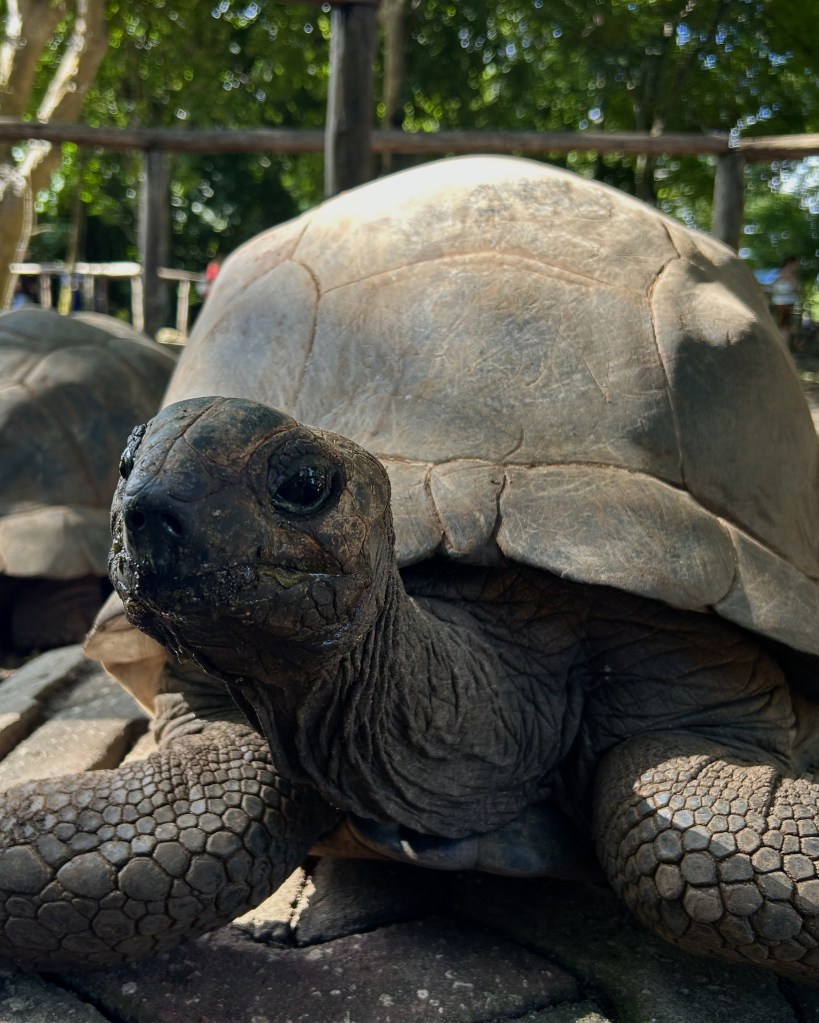
And then — out of nowhere — you find yourself face to face with a giant Aldabra tortoise. Originally gifted to the island by British colonialists from the Seychelles, the tortoises have since multiplied into a whole population. Some of them are over 150 years old and weigh as much as a small car. You can walk among them slowly and observe — their ancient, weathered faces, their massive shells, and the calm way they move through space. There’s even a protected area for baby tortoises.
The contrast between the heavy past of the prison and the quiet, steady presence of these gentle giants is surreal. But it’s that contrast that makes Prison Island unforgettable.

Swimming With Dolphins at Mnemba Island
Swimming with dolphins near Mnemba Island was one of the most magical moments of the entire trip. You start your journey at Muyuni Beach, on the island’s northeast coast. A local captain welcomes you onto his wooden boat — creaky, simple, and full of charm. If the sea is calm, you glide smoothly across turquoise waters. If not, like in my case, the boat bounces on the waves like a theme park ride. But it’s worth it.
After about fifteen minutes, you reach a cluster of boats offshore — and catch your first glimpse: dolphins breaking the surface in the distance. This area near Mnemba is a natural feeding zone, so the dolphins are completely wild. No feeding, no tricks — just real life.
Your captain maneuvers between the boats, reading the ocean, then turns and shouts — “Jump!” — and you dive in without hesitation. If you’re lucky, you’ll find yourself just meters away from a pod of dolphins, gliding effortlessly, playing with each other like you’re not even there. Seeing them up close was the highlight of my trip. I was so caught up in the moment — sitting at the edge of the boat, waiting to jump — that I didn’t even take a single photo. This ended up being one of only two experiences from the trip where the photos weren’t mine. I was just too busy feeling everything. You repeat this dance a few more times — chasing the magic, diving in again and again — until your body is tired and your heart is full.
Afterward, you head to the reef surrounding Mnemba Island. The snorkeling is peaceful, colorful, and slow — like a moment to digest what just happened. Then comes a simple feast: your captain hands you fresh mango, lime, watermelon, bananas. You eat with wet fingers and a huge smile on your face as the boat drifts back to shore.
Kitesurfing at Paje Beach
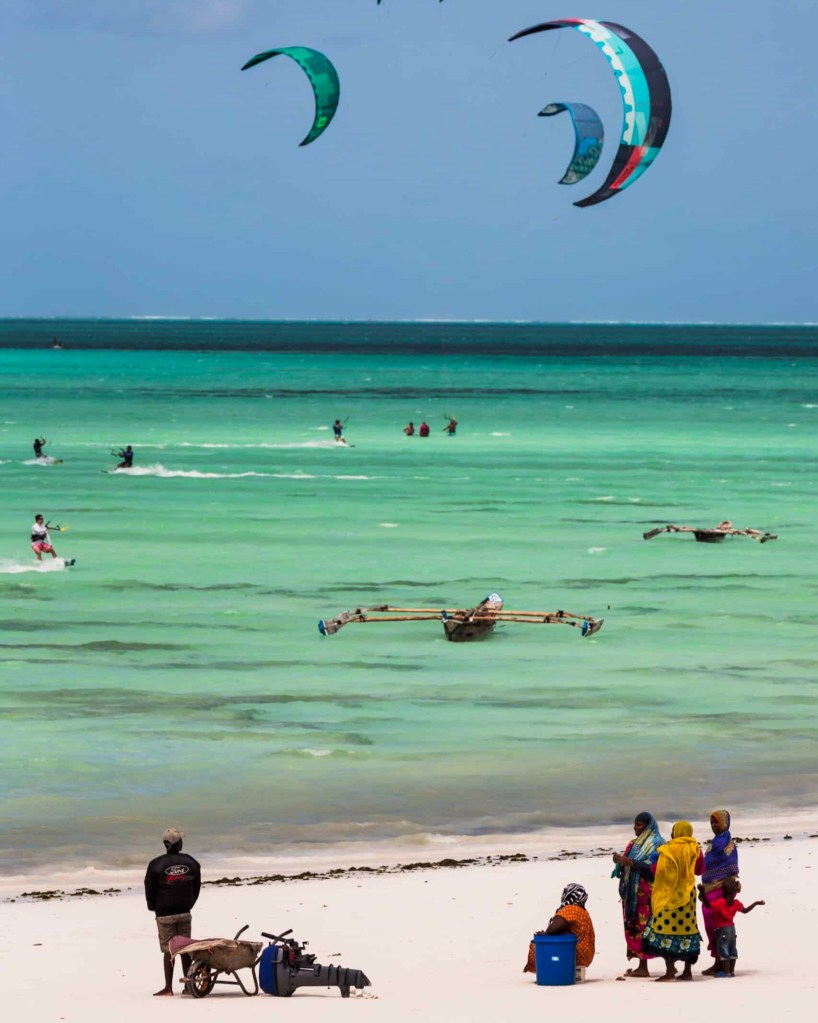
Zanzibar is famous for its kitesurfing — and rightfully so. It’s not every day you get to ride wind over emerald waters in the Indian Ocean, navigating between local fishermen gliding across the waves on handmade wooden sailboards. If you’re into kitesurfing or windsurfing, you might want to base yourself in Paje for your entire stay — it really is that special.
What surprised me the most was the road leading there. For such a popular destination, the way in feels untouched — with some of the roughest roads and most modest homes I saw during my time on the island. It’s a sharp contrast. Paje is buzzing, beautiful, and international — but its surroundings haven’t changed much at all. And somehow, that only makes arriving feel more real.
Once you reach the beach, the vibe shifts instantly. Dozens of colorful kites in the sky, boards slicing across the water, people of all levels either flying, falling, or learning. You pick a kite school — there are plenty — grab your gear, and go.
Then it’s just you, the ocean, the wind, the white sand, and the occasional fisherman. You follow the breeze and see where it takes you. Some days it takes you far. Other days, not so much. Either way, you’re exactly where you need to be.
Just one tip: check the wind conditions before you go. Zanzibar delivers — but only when the wind shows up too.
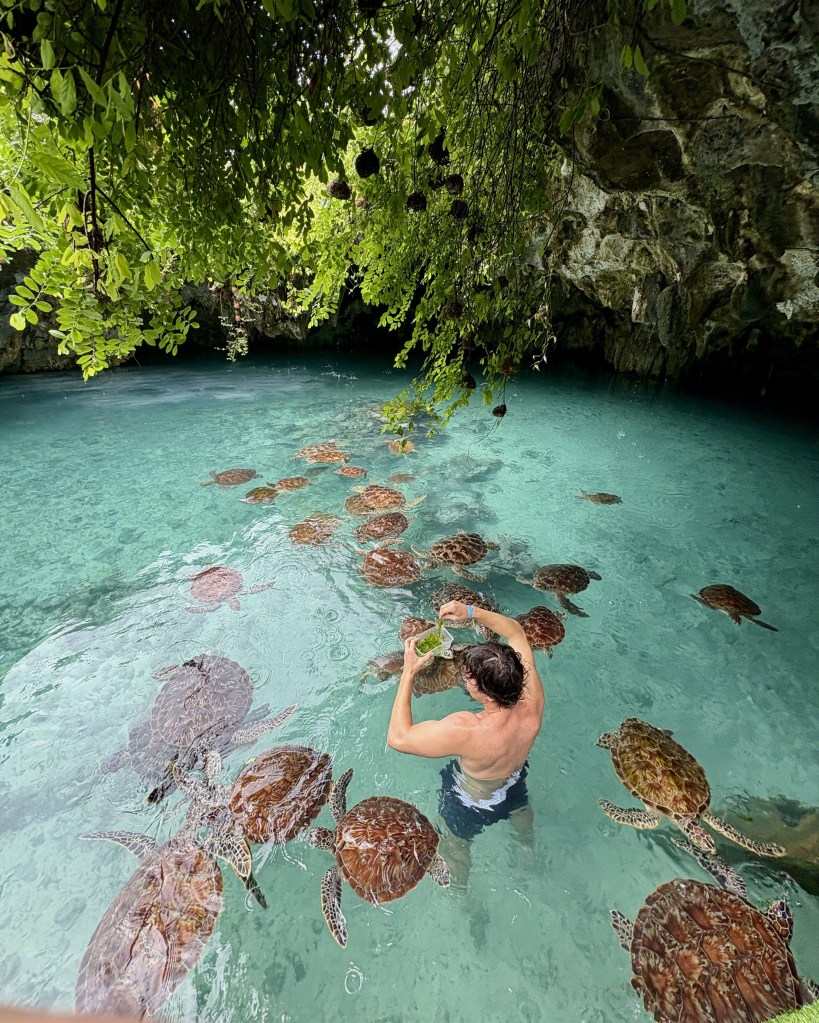
Feeding Turtles at Salaam Cave
Once again this is one of those experiences where the smile on your face simply won’t go away — not during, and not after.
Salaam Cave is located near the southern tip of the island, so if you’re staying up north, you’ll want to start your day early. It’s a 1.5 to 2 hour drive, but like everywhere in Zanzibar, the journey is half the experience. You’ll pass through the forest-covered center of the island, drive straight through Jozani Forest, and if you’re lucky, catch a glimpse of the red colobus monkeys leaping through the trees.
When you arrive, don’t expect anything dramatic from the outside. There’s just a small stairway leading down — but once you take it, it’s like entering another world. The cave opens up beneath you into something straight out of Avatar: vivid blue-green water surrounded by jagged rock formations, with a natural skylight overhead where birds come and go and light pours in like a spotlight.
And at the center of it all? Sea turtles. Real ones. Small, elegant, and peacefully swimming in this surreal space. You climb in and swim among them — quietly observing the patterns on their shells, watching how each moves differently, how some are shy and others a little too bold. You’ll even get to feed them pieces of seaweed, which somehow makes the whole moment even more magical… and slightly chaotic.
Heads up: don’t wear green swimwear. The turtles can’t tell the difference between that and the seaweed — and yes, you might get a little nibble from the turtles like me if you’re not careful.
Bonus Picks – If You’ve Got the Time

Mtende Beach – Feels like stepping into a pirate movie set — high cliffs, hidden coves, and a storybook kind of vibe. Local legends say pirates once came ashore here, hiding treasures inside ancient baobab trees. Whether you believe it or not, the beach is stunning. Located near the island’s southern tip, it’s part of a conservation zone with monkey observation towers and baobab jungles. At low tide, the beach stretches wide. At high tide, it nearly vanishes.

Jozani Forest – If all the greenery surrounding the island still doesn’t cut it for you, head straight into the heart of it at Jozani Forest. It’s humid, dense, and packed with life — from twisted fig trees and towering palms to the red colobus monkeys swinging overhead. The forest floor is soft and silent, the air hangs heavy, and everything feels slightly slower, slightly older. It’s another one of those places that feels just a little unreal — even by Zanzibar standards.

Spice Garden – For over 400 years, Zanzibar and its sister island Pemba have been known as the “spice islands.” I was hesitant at first (I’ve done spice tours before, including in Madagascar), but I’m so glad I gave this one a chance. You learn how much effort goes into the spices we toss into dishes without a second thought — and how locals rely on them for both food and medicine, in ways most pharmacies can’t replicate. There’s also a fun game of “guess the spice,” plenty of tasting, and a market at the end. Let’s just say I didn’t leave empty-handed.
Before You Go: 10 Honest Tips I’d Share With a Friend
1. Don’t Miss a Single Sunset
The best sunsets are on the west coast — especially around Kendwa — but really, anywhere you can face the ocean in the evening will do. Swim through it, sip something fruity while watching it, or just sit still. Every sunset feels like a reset button. Soak it in. Remind yourself: life doesn’t always need a plan. Hakuna Matata.
2. Treat People as Friends, Not Workers
Tanzanian people — and especially Zanzibaris — are some of the kindest I’ve ever met. Many speak great English, but more than that, they go out of their way to help you. Whether it’s a tour guide, a restaurant server, or a boat captain, try to see them not just as people doing a job, but as new friends. That shift in mindset changed the way I experienced the island — and made every moment better.
3. Learn Just a Couple Words of Swahili — It Goes a Long Way
One of the first things I noticed: people here are proud of their language — really proud. Swahili doesn’t just belong to Zanzibar — it ties together millions across East Africa. Learning even a couple of words like Hakuna Matata or Asante Sana makes a difference. It’s not performative — it’s connection.
4. Book the Tours — It’s Worth It
I’m usually a budget traveler who avoids tours and prefers to figure things out on my own. Zanzibar changed that. Driving here is intense — left-side traffic, unpredictable roads, and let’s just say, some “creative” police stops. Tours took that stress off my plate and actually added value. The guides shared local insights, helped with communication, and made the experience richer. I’d recommend booking ahead where you can — it gave me peace of mind and more time to enjoy everything.
5. Don’t Miss Out on Swahili Food
Swahili cuisine is this perfect blend of African, Arabic, and Asian influences — and the coconut-based dishes in particular make you want to lick the plate. Try local spots, go for grilled seafood, and don’t miss the fresh fruit. I’m still dreaming about those pineapples and passion fruits.
6. Try Baladin — Even If You’re Not Nearby
Talking about food — I have to mention Baladin. This isn’t an ad — they don’t even know I exist. But Baladin gave me one of the best food experiences I’ve ever had. Baladin is the brainchild of Teo Musso, a winemaker’s son from Italy who fell in love with beer instead. He opened Le Baladin in Italy back in the ’90s, then brought his vision to Zanzibar — combining home-brewed Italian craft beer with island flavors. Every detail at Baladin feels intentional, from the design to the seafood pasta to their beer. I’m no expert, but the Baladin Sud was one of the best beers I’ve tasted. If you’re nearby, go. Even if you’re not, still go.
7. Go for a Dip. Anytime. Anywhere. Just Do It
One of the best decisions I made was wearing a swimsuit almost all the time. That way, I could jump into the water whenever I felt like it. Mid-walk, mid-conversation, mid-dinner — I didn’t care. The Indian Ocean here is addictive. Warm, clear, and soul-soothing. So don’t wait for the “perfect” time to swim. Just go for it. You’ll never regret it.
8. Go for a Beach Run — It’ll Show You a Different Side of the Island
Like I said, the roads in Zanzibar can be a bit chaotic — and treadmill runs are just depressing. So I ran on the beach. Early mornings were quiet, peaceful, and magical. I saw dolphins in the distance, sea stars along the shore, and once, a group of horses running across shallow water. If you’re not a runner, take a long walk instead. Either way, start your day like this — it sets the tone.
9. If There’s Live Music Nearby, Go
This was a total surprise for me. One night we found ourselves at a place playing live music, and I genuinely didn’t expect much. But I couldn’t stop myself from clapping, smiling, and cheering. Just like the food, the music blends cultures and rhythms, and the energy is contagious. If there’s a place with live music near you — don’t overthink it, just go.
10. Yes, There Will Be Beach Hustlers — Just Breathe
You’ll definitely encounter people trying to sell you something as you walk the beach — tours, bracelets, fruit, whatever they can. It can feel overwhelming at times, but most of them are just trying to make an honest living. A simple, kind “No thank you” goes a long way. It’s okay to feel frustrated — just try not to carry it with you.
These are the things I’d tell any friend heading to Zanzibar. But really, it’s not about what you do — it’s about how you feel while you’re there.
Zanzibar has a way of changing your pace. Let go of the schedule, let in the light, and don’t overthink it. Just be there. That’s what Hakuna Matata really means.

 denizdertsavar.com
Leave a comment